
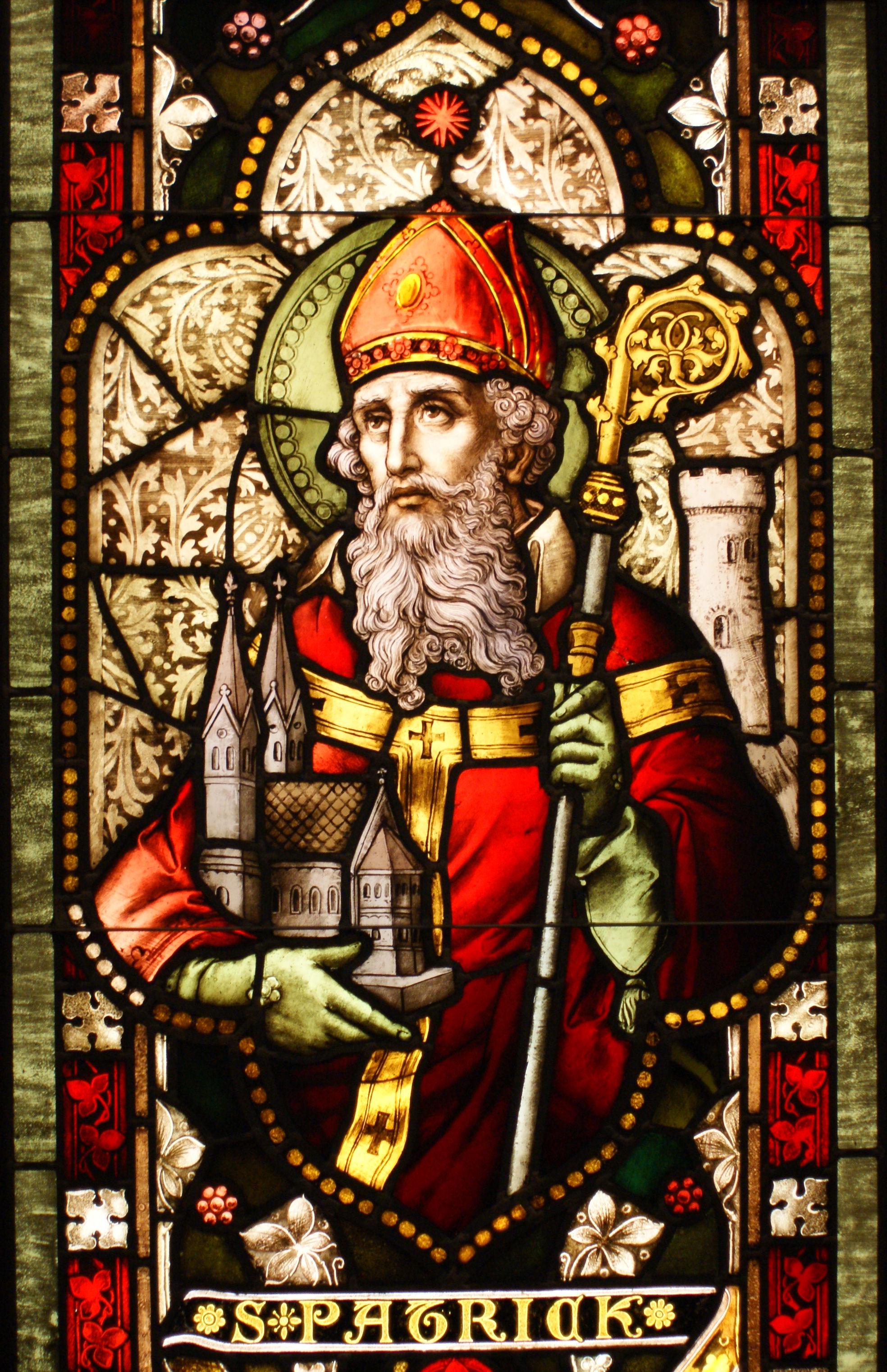
As I’ve been researching St. Patrick’s day I have been understanding exactly why we should celebrate such a day. St. Patrick was a truly remarkable man, as men are when they allow their lives to be governed by the Holy Spirit.
According to his “Confessio”, (his autobiography), he believed that the reason he and thousands of others were captured, taken from their homes and families and sold into slavery, was God’s wrath. He believed he had brought his circumstances upon himself because he had not been walking with the Lord.
While serving as a slave, he learned the culture and the Celtic language that later he would speak to convert the Irish people to Christianity. Most importantly during this time, he discovered God while herding his master’s flocks and had such an amazing conversion experience that it affected the rest of his life.
In his own words:
Reading that gave me prickles down the back of my neck. This guy really knew God – and well!

St. Patrick said that while herding the flocks he would pray.
After 6 years of slavery he heard God tell him in his sleep that he was going to return to his homeland. He escaped soon after and made his way until he got to a ship. He was refused passage on the ship, so walked away and started to pray. Before he had even finished praying, he was called back and granted passage. The ship’s journey was eventful with them running out of food. The crew challenged St. Patrick that if God was powerful, he would provide them food. St. Patrick’s response was:
‘Be converted by faith with all your heart to my Lord God, because nothing is impossible for him, so that today he will send food for you on your road, until you be sated, because everywhere he abounds.’ And with God’s help this came to pass; and behold, a herd of swine appeared on the road before our eyes, and they slew many of them, and remained there for two nights, and the were full of their meat and well restored, for many of them had fainted and would otherwise have been left half dead by the wayside. And after this they gave the utmost thanks to God, and I was esteemed in their eyes, and from that day they had food abundantly. They discovered wi
ld honey, besides, and they offered a share to me, and one of them said: ‘It is a sacrifice.’ Thanks be to God, I tasted none of it.
He was also taken captive for a second time, but this time God told him it would be only for two months, and he escaped on the 60th day.
He made his way back to his father’s house. His family begged him not to leave, but God had greater plans in store for his life. St. Patrick received a vision that convinced him to return to Ireland.
And, of course, there, in a vision of the night, I saw a man whose name was Victoricus coming as it from Ireland with innumerable letters, and he gave me one of them, and I read the beginning of the letter: ‘The Voice of the Irish’, and as I was reading the beginning of the letter I seemed at that moment to hear the voice of those who were beside the forest of Foclut which is near the western sea, and the were crying as if with one voice: ‘We beg you, holy youth, that you shall come and shall walk again among us.’ And I was stung intensely in my heart so that I could read no more, and thus I awoke. Thanks be to God, because after so many ears the Lord bestowed on them according to their cry.
St. Patrick had a period of training to be a Catholic missionary in a monastery in France. Here he had trained under St. Germain and excelled in a variety of areas. A writer of St Germain’s life in wrote: “Since the glory of the father shines in the training of the children, of the many sons in Christ whom St Germain is believed to have had as disciples in religion, let it suffice to make mention here, very briefly, of one most famous, Patrick, the special Apostle of the Irish nation, as the record of his work proves. Subject to that most holy discipleship for 18 years, he drank in no little knowledge in Holy Scripture from the stream of so great a well-spring.
His many years as a slave in Ireland were somewhat of a blessing in disguise. Those years had taught him the language, customs and rituals of the Irish Celtic people. This understanding of their culture enabled him to speak to their hearts and respect their spirituality.
Instead of just preaching religious dogma, ethics, and the pursuit of eternal life St. Patrick wisely incorporated mysteries, symbols, and rituals with which they were already familiar to explain Christian principles. He never asked them to stop believing in the supernatural beings they had worshipped for eons. Instead, he told them to regard these “gods” whom they had feared for so long as demons. Instead of fearing them, they could have the power through Christ to defeat them.
Naturally he met great resistance from the druids. They tried to arrest him, and even kill him. But they were not successful because it was ‘not his time’.
In his Conffessio, St. Patrick explains that he did not take gifts that were offered to him from wealthy women or accept money for baptising people as he wished to remain above reproach.
But in the hope of eternity, I safeguarded myself carefully in all things, so that they might not cheat me of my office of service on any pretext of dishonesty, and so that I should not in the smallest way provide any occasion for defamation or disparagement on the part of unbelievers
His efforts were not in vain. He was successful in bringing Christ to a nation that steeped in paganism.
So, how is it that in Ireland, where they never had any knowledge of God but, always, until now, cherished idols and unclean things, they are lately become a people of the Lord, and are called children of God; the sons of. the Irish [Scotti] and the daughters of the chieftains are to be seen as monks and virgins of Christ.
There is a lot of myths and legends surrounding the life of St. Patrick. We do know a fair bit of his amazing life because there are two accounts written in his own hands.
St. Patrick’s autobiography, Confessio has been written by him towards the end of his life. The blue italicised quotes I’ve included have come straight from his Confessio. You can read it here.
There is also a letter written by St. Patrick to Coroticus pleading for the freedom of many of his followers who were being held as slaves. It is remarkable because it is a written testament to St Patrick’s opposition to slavery. St Patrick of Ireland loved the land and her people. He knew that freedom was an inalienable right of humankind. St Patrick of Ireland was the first Christian leader to publicly and passionately proclaim slavery to be opposed to God’s will.
It’s a shame that in all the celebrations around the world on St. Patrick’s day more consideration isn’t given to the extraordinary life of this man. However, his legacy is great, and for those who chose to remember the man for who this day is to honour, indeed remember a man who made himself available to be used by God in such a mighty way.
3 Comments
Wow. Imagine being responsible for converting an entire country!
Important celebration when I was growing up because my grandmothers family church was St Patricks – Dalby, it’s also where my Mum and Dad married.
Wow! I had no idea of the origin – I’m sure I must have learnt it at Catholic school but forgotten! Interesting how similar his declaration is to the nicene creed. Thanks for the research Caitlin!